
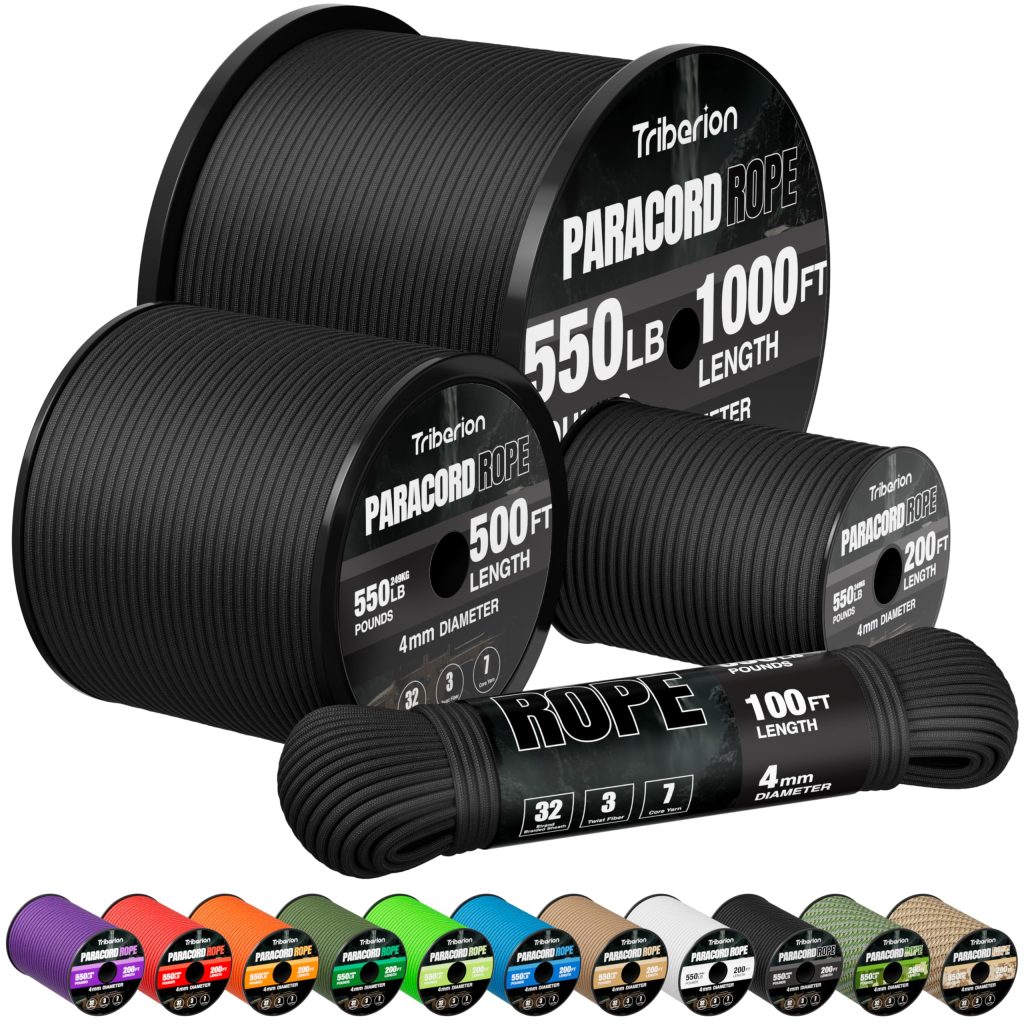
Quick answer: do not choose between “nylon” and “polyester” from appearance alone. Confirm the sheath material, core material, construction, diameter, stated strength, and intended use for the exact product. Fiber type influences handling and environmental behavior, but finished-cord performance also depends on braid, coating, quality, knots, wear, and manufacturing.
Start with the product record
| Fact to verify | Why it matters |
|---|---|
| Sheath and core material | A cord can use different fibers in the cover and inner yarns; a general product name may not describe both. |
| Construction | Core count and braid affect size, feel, and project compatibility. |
| Diameter | Hardware, beads, buckles, patterns, and knots may depend on actual size. |
| Stated strength and test basis | A pound figure is not automatically a safe working load. |
| Intended use | Utility cord is not converted into life-safety equipment by choosing a particular fiber. |
How fiber comparisons help
Samson’s rope-selection material compares generic nylon and polyester fiber properties, including elongation and temperature ranges. Those values explain why material identification can matter, but they are generic fiber data rather than measurements of a finished Triberion cord. A finished product can behave differently because of its yarn, braid, sheath, coating, diameter, conditioning, and test method.
For a project, translate the material question into a practical requirement: does the line need to hold tension with limited adjustment, tolerate repeated bending, pass through specific hardware, accept a compact knot, or provide a particular surface feel? Then look for evidence for that exact finished cord.
What not to infer from appearance
- A glossy sheath does not prove one fiber type.
- The number of visible core bundles does not by itself identify their material.
- A successful hand pull does not establish breaking strength or a safe load.
- A seller’s use of “paracord” does not prove compliance with a military specification.
- A clean exterior does not reveal heat, chemical, or internal damage.
Check Triberion listings carefully
Triberion catalog records confirm the current products’ approximate 4 mm diameter, core count, stated strength, lengths, and intended utility uses. Where those records do not separately verify sheath and core fiber, this guide does not assign one. Check the current Amazon configuration and packaging, or contact support with the ASIN before choosing cord for a material-sensitive project.
Strength and safety boundary
Material tables cannot supply a safe working load for a finished, knotted cord. Knots, abrasion, sharp bends, shock loading, age, sunlight, water, chemicals, and heat change performance. Do not use Triberion utility paracord for climbing, fall arrest, rescue, towing, lifting people, or suspended overhead loads.
Frequently asked questions
Is nylon always stronger than polyester?
No universal answer follows from the fiber name. Compare test results for finished cords of the same size and construction, and confirm the test method.
Can I identify the material by melting an end?
Do not rely on an improvised burn test. It creates fumes and burn risk and may not identify blended construction. Use product documentation.
Does “550 cord” prove it is nylon?
No. Treat the material and stated strength as separate facts that both require support for the exact product.
Sources reviewed
Reviewed September 11, 2026: Samson rope selection and technical information for generic fiber and construction concepts, and Paracord Planet’s cord comparison chart as an example of comparing finished-cord specifications. Neither source tests or endorses Triberion products.
Evidence boundary
This article intentionally avoids assigning unverified fiber composition or generic competitor performance figures to Triberion cord.
See the Triberion construction comparison and inspection and replacement guidance.