
Quick answer: paracord can serve as a replacement or spare guyline for some tents and tarps when its diameter fits the shelter’s tensioners and tie-out hardware. It is not automatically the best line for every shelter: stretch, water exposure, bulk, visibility, and the maker’s setup instructions all matter. Test the complete setup before a trip and keep the original line when the shelter depends on a specified cord or adjuster.
Check these four things before changing guylines
| Check | Why it matters | What to do |
|---|---|---|
| Diameter | A line that is too small can slip; one that is too large may not enter the adjuster. | Thread a short sample through every tensioner and lock it under hand tension. |
| Stretch | A line that lengthens can let a fly sag and may need retensioning. | Pitch at home, leave it tensioned, and recheck after several hours. |
| Visibility | Low lines can become trip hazards after dark. | Use reflective line or bright markers and verify visibility with a headlamp. |
| Length | Knots, adjusters, uneven ground, and extra anchor distance consume line. | Measure each run separately and keep a dry repair reserve. |
Match the line to the shelter
Start with the tent or tarp manual. Preserve the specified routing, attachment points, minimum stake-out distance, and any warnings about wind. REI’s tent setup guidance recommends using guylines to stabilize a shelter in strong wind and carrying extra line, stakes, and tensioners. That supports carrying a repair option; it does not mean every cord works with every tent.
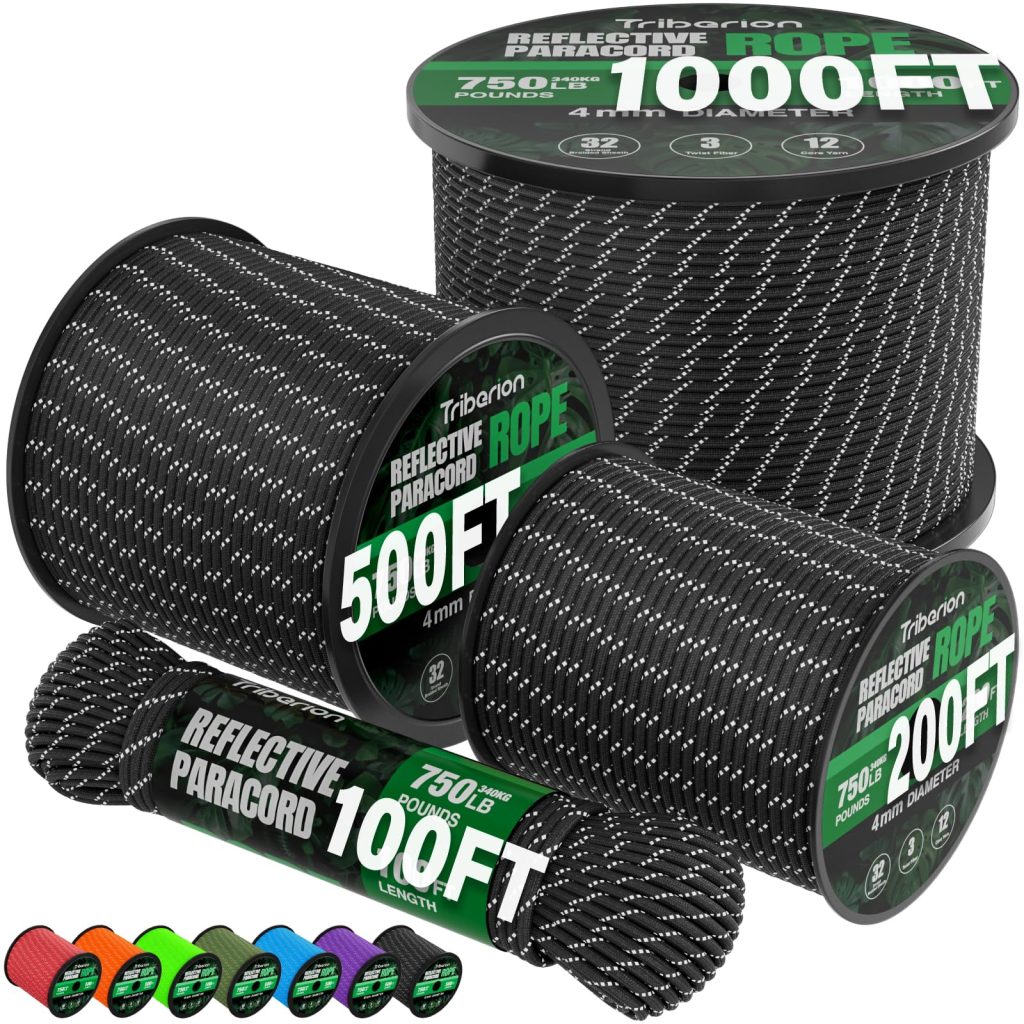
Triberion’s current paracord catalog uses an approximately 4 mm profile. That dimension may fit simple knots and some larger adjusters, but compact backpacking hardware can be designed for thinner line. Confirm fit physically rather than assuming compatibility from a product photograph.
Standard or reflective cord?
Reflective detail can make a guyline easier to locate when a flashlight or headlamp points toward it. It does not glow by itself and cannot remove the trip hazard. Standard black cord may suit repairs and utility runs where visibility is less important. Add flags or route lines away from walkways when people could cross the setup.
A simple home test
- Cut only a short test length and seal the end according to the cord instructions.
- Install it through the actual shelter hardware and tie the intended knots.
- Pitch the shelter in a clear area, tension it, and mark the initial adjuster position.
- Check for slipping, sheath damage, unwanted stretch, and difficult release.
- Repeat after the cord is damp if wet-weather use is expected, then dry it fully before storage.
This is a compatibility check, not a certified strength test. Do not create hazardous loads or test a shelter in severe weather.
Limits
Utility paracord is not climbing, fall-protection, rescue, towing, or overhead-lifting equipment. A 550, 750, or 1000 lb label is a stated strength specification rather than a safe working load for a knotted, weathered guyline. Follow evacuation and severe-weather guidance instead of relying on cord strength to make an unsafe campsite acceptable.
Frequently asked questions
Is 550 paracord strong enough for tent guylines?
Strength is only one factor. Hardware fit, stretch, abrasion, knots, weather, and shelter instructions can decide whether it works. Use the manufacturer’s line when compatibility is uncertain.
Is reflective paracord glow-in-the-dark?
No. Reflective elements return directed light; they do not generate light.
How much spare line should I carry?
Measure the likely repair runs and add allowance for knots and difficult anchor locations. Several labeled lengths are often easier to use than one tangled bundle.
Sources reviewed
Reviewed September 11, 2026: REI tent setup guidance for guyline use and spare setup items, plus Triberion catalog records for diameter, construction, length, and stated-strength labels. REI does not test or endorse Triberion products.
Evidence boundary
No universal tensioner fit, elongation percentage, or shelter wind rating is claimed. Compatibility must be checked with the user’s actual shelter and hardware.
Continue with our camping paracord guide or compare reflective and standard cord.