
Jute & Natural Rope
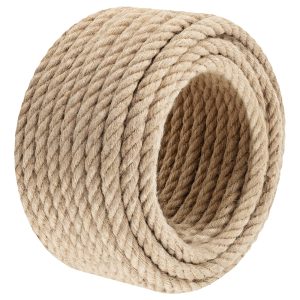
Natural jute rope offers a warm tan color, visible twisted texture, and traditional hand feel that synthetic line cannot fully reproduce. It works especially well for crafts, nautical or farmhouse decor, garden accents, displays, supervised recreation, and other non-critical projects where appearance matters.
Why choose natural jute?
Jute fibers create a rustic surface that complements wood, canvas, plants, and neutral interiors. A 1/2-inch rope makes a substantial visual line for rail accents, shelving details, wrapped posts, barriers, and large craft work. Natural material also accepts knots and bindings readily. Small differences in color, diameter, fiber ends, and texture are normal rather than manufacturing flaws.
Plan around natural-fiber behavior
Unlike many synthetic cords, jute absorbs moisture and can change as it weathers. Persistent dampness can lead to odor, mildew, loss of strength, or rot. Sun and abrasion fade and roughen the surface. Use protected placement where possible, allow wet rope to dry fully, and expect an outdoor installation to age visibly. Decorative indoor work generally retains its appearance longer.
Measuring and finishing
- Confirm the 1/2-inch diameter fits every hole, cleat, bracket, or channel.
- Add length for knots, wraps, end treatment, trimming, and later adjustment.
- Tape or tightly bind the rope on both sides of the cut before using a sharp blade.
- Finish the end with whipping or a suitable adhesive; natural fiber cannot be heat-sealed like nylon.
Important load limitations
Decorative rope should not be assumed to be structural rope. Do not use this product for climbing, fall protection, rescue, towing, overhead lifting, or supporting a person. A porch swing, railing, or similar installation needs a qualified design and components with verified working-load data. Inspect recreational setups for rot, severe fraying, loose strands, and damage before every use.
Frequently asked questions
Can jute rope be used outdoors?
Yes for inspectable, non-critical projects, but protected placement and dry storage improve service life.
Will it shed fibers?
Some shedding is normal. Gentle brushing and a clean end finish help manage loose fibers.
How should unused rope be stored?
Keep it dry, ventilated, loosely coiled, and away from chemicals, pests, and direct heat.
Read the full natural jute rope selection and care guide before starting a project.
Showing the single result