
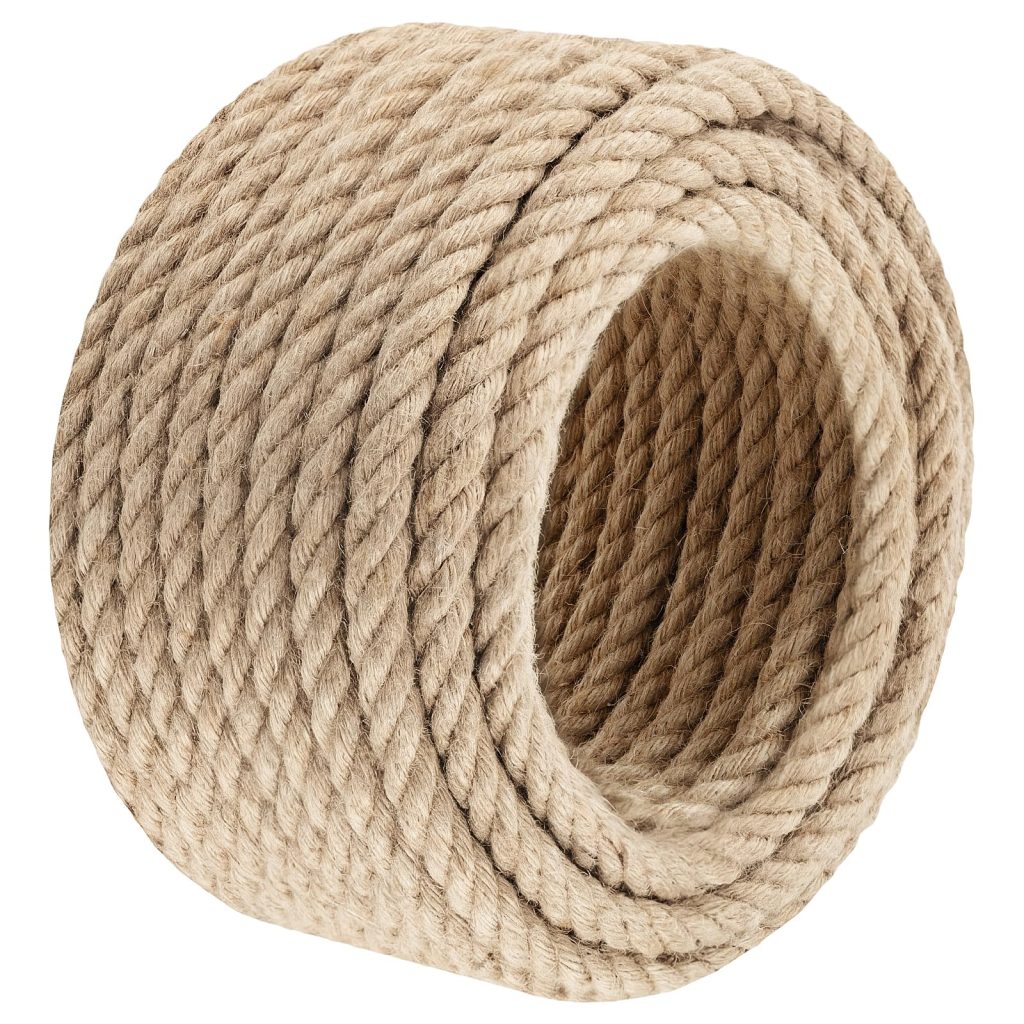
Quick answer: choose jute rope when natural color, visible texture, and a traditional hand feel matter. Confirm diameter against every piece of hardware, add length for knots and end finishing, and use it for decorative or non-critical utility projects. Keep it dry and inspect it regularly. Do not assume natural jute is suitable for climbing, lifting, towing, or supporting people.
What makes jute different?
Jute rope is formed from plant fibers twisted into yarns and strands. Those fibers give the rope a warm tan color, slightly irregular surface, and tactile finish. The look pairs naturally with timber, canvas, landscaping, nautical decor, and farmhouse-style interiors. Variation in shade, diameter, fiber ends, and texture is part of the material rather than a sign that every foot will look machine-perfect.
Natural fiber also behaves differently from nylon or polyester. It absorbs moisture, can shed, and changes color and texture with weather. It cannot be heat-sealed. Those characteristics are manageable when the project is selected and maintained appropriately, but they make jute a poor choice for hidden, permanently wet, or safety-critical installations.
Choose the diameter for appearance and hardware
A half-inch rope creates a substantial visual line and fills the hand more than craft twine. It works well for wrapped posts, rail accents, large displays, barriers, garden features, and supervised grip activities. Before ordering, measure the clear inside dimension of holes, cleats, pulleys, brackets, and channels. Nominal rope diameter and natural variation mean a tight opening can become difficult to thread.
For small macramé details or miniature crafts, a thinner cord may produce cleaner proportions. For a bold architectural accent, half-inch rope is usually more visible. Do not choose diameter as a substitute for verified load data.
Estimate length without coming up short
Measure the direct path first, then add material for each knot, wrap, turn, splice-like decorative section, and end treatment. Wrapping a post can consume several times its height because the rope travels around the circumference on every pass. A test wrap over a short known distance provides a more reliable multiplier than guesswork.
Add a reserve for trimming and later adjustment. A 50-foot coil is convenient for medium-size craft and decor projects, but complex continuous layouts may need more than one coil. If appearance must stay uniform, acquire the material together because separate natural-fiber batches can vary.
How to cut and finish jute rope
- Mark the final location after confirming the project measurement.
- Wrap both sides of the cut tightly with painter’s tape, electrical tape, or temporary twine.
- Use a clean, sharp rope knife or shears on a protected surface.
- Add permanent whipping, a suitable adhesive, or the project’s decorative end fitting.
- Trim only loose surface fibers; do not cut structural strands to make an end look smooth.
Never use flame to seal jute. Natural fibers char and can ignite. If an adhesive is used, check compatibility, ventilation needs, cure time, and whether the finished item will contact skin, pets, plants, or food areas.
Indoor care
Vacuum or gently brush loose fibers rather than soaking the rope. Keep it away from persistent steam, plumbing leaks, damp masonry, and direct high heat. Where shedding matters, test a small hidden section before applying any finish. Check attachment points because friction against a fastener may wear a groove that is not obvious from the front.
Outdoor care
Use jute outdoors only where weathering is acceptable and condition remains easy to inspect. Protected porches and seasonal displays generally age more slowly than soil contact or full exposure. Let wet rope dry with airflow. Do not seal moisture inside a container. Check for dark staining, odor, softness, rot, loosened strands, severe fuzzing, or insect damage and replace affected rope.
Know the safety boundary
Natural decorative rope must not be assumed to have a dependable working-load limit. Age, moisture, knots, sharp bends, wear, and manufacturing variation all matter. Use verified structural rope and rated hardware for porch swings, suspended seating, barriers that protect a fall edge, lifting, towing, or any installation supporting people. Consult a qualified installer when failure could cause injury.
Frequently asked questions
Can jute rope stay outside all year?
It will weather and may weaken, especially when repeatedly wet. Protected, inspectable placement is preferable, and replacement should be expected.
How do I reduce shedding?
Handle it gently, make clean bound cuts, and brush loose fibers. Some surface shedding is normal.
Can I wash jute rope?
Saturating it can alter shape and encourage slow drying. Use the least moisture practical and follow any manufacturer care instructions.
Is jute safe for a porch swing?
Do not rely on decorative jute to support a person without verified ratings and a professionally designed system. Use it as a decorative accent when structural suitability is unknown.