
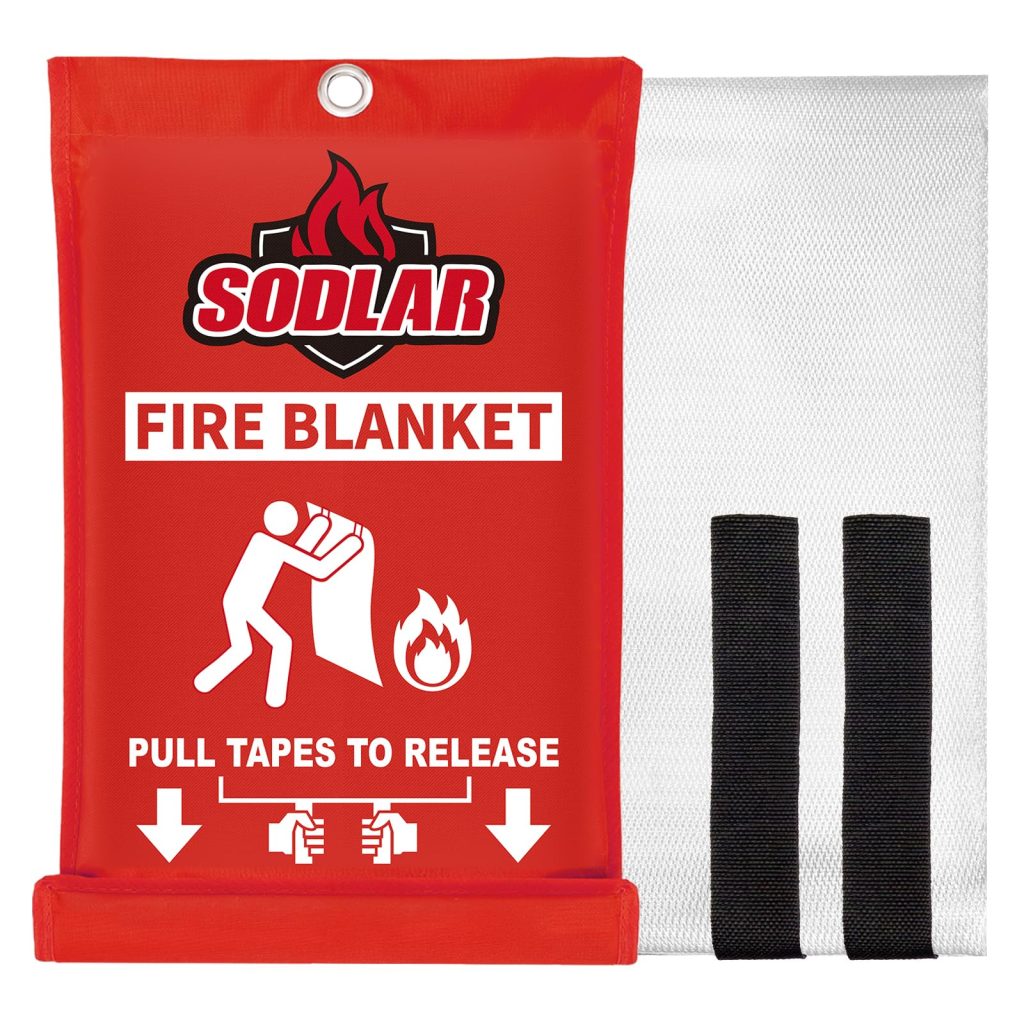
Quick answer: a fire blanket may help cover a very small, contained fire only when the blanket is immediately available, the exit remains behind you, smoke is limited, and you can approach without personal risk. If the fire is spreading, conditions are uncertain, or the escape route could be lost, leave immediately, close doors when possible, call emergency services from outside, and stay out.
Safety note: This general guide does not replace the instructions supplied with the blanket, local fire-department guidance, training, or emergency judgment. Fire behavior changes quickly. Protecting life and maintaining an exit always take priority over attempting to control property damage.
Understand the blanket’s role
A fire blanket is a sheet of fire-resistant material intended to cover some small fires and restrict oxygen. It can be a useful preparedness item near a kitchen, workshop, grill area, fireplace, vehicle, or campsite. It complements working alarms, clear exits, a household escape plan, and appropriate extinguishers. It does not make every fire approachable and does not eliminate the need to call emergency services.
The U.S. Fire Administration advises keeping a pan lid or baking sheet nearby while cooking so a small pan fire can be covered. It also emphasizes staying with cooking and turning the burner off if leaving. A purpose-made blanket offers another covering tool, but users should follow the manufacturer’s directions and never improvise when fire or smoke is growing.
Choose a safe storage location
Mount or store the pouch where it is visible, unobstructed, and reachable while moving toward an exit. Do not place it directly above a stove, behind a likely fire source, at the back of a crowded cabinet, or anywhere flames could block access. Pull tabs should remain exposed. In a vehicle or outdoor kit, protect the package from moisture, crushing, fuel, and sharp tools.
Every capable household member should know where the blanket is and should read the printed instructions in advance. An emergency is not the time to discover the opening direction or unfold a tightly packed product for the first time.
Before approaching any fire
- Alert other people and make sure they begin moving toward safety.
- Keep a clear exit behind you at all times.
- Call emergency services, or have another person call, according to local guidance.
- Assess whether the fire is very small, contained, and producing limited smoke.
- Do not attempt use if flames are spreading, the room is filling with smoke, or you feel uncertain.
Smoke and toxic gases can incapacitate quickly. A blanket is not breathing protection. Never move deeper into a building or pass the fire to retrieve one.
General deployment sequence
Follow the product’s own instructions first. A typical process is to pull the tabs downward, release and unfold the blanket, hold it so the material protects the hands, and approach carefully while keeping the exit behind you. Place the blanket over the entire small fire rather than throwing it from a distance. If it is safe and possible, turn off the heat source without reaching through flame.
Leave the blanket in place and do not lift an edge to check immediately. Introducing oxygen can allow fire to restart. Move away, continue evacuation as needed, and follow emergency-service instructions. If coverage is incomplete or the fire continues, abandon the attempt at once.
Cooking-oil precautions
Never pour water onto burning cooking oil; it can spread flaming liquid. Do not carry a burning pan because movement can spill fuel and cause burns. Official U.S. Fire Administration guidance for a small pan fire is to slide a lid or baking sheet over the pan, turn off the burner, avoid moving the pan, and leave the cover in place until cool. A blanket should be used only in accordance with its instructions and only when full coverage can be achieved safely.
After deployment
Do not touch the blanket, pan, appliance, or surrounding surface until emergency personnel or applicable instructions indicate that it is safe. Heat can remain trapped long after visible flame disappears. Ventilation and cleanup should wait until the scene is declared safe. Fiberglass material can irritate skin, so avoid unnecessary handling.
Treat a blanket exposed to fire as needing replacement unless the manufacturer explicitly provides a verified inspection and reuse procedure. Replace any product with torn packaging, damaged pull tabs, contamination, missing instructions, or uncertain history.
A complete fire-readiness checklist
- Install and test smoke alarms according to local fire-safety guidance.
- Practice two ways out where possible and choose an outside meeting place.
- Keep cooking attended and combustible items away from heat.
- Maintain suitable extinguishers and obtain hands-on instruction.
- Keep exits, the fire blanket, and emergency numbers accessible.
- Teach everyone to get out, stay out, and call for help from outside.
Frequently asked questions
Does a fire blanket replace a smoke alarm or extinguisher?
No. It is only one element of preparedness, and different fires require different equipment and decisions.
Can I use the blanket if smoke is increasing?
No. Leave immediately. Smoke is a major life hazard, and a blanket provides no respiratory protection.
Should I remove the blanket after the flame disappears?
Do not lift it immediately. Reintroducing oxygen can cause reignition. Follow emergency-service and manufacturer instructions.
Can the blanket be reused?
Assume replacement is needed after exposure unless the manufacturer explicitly states a safe reuse process.
Official safety sources
Review the U.S. Fire Administration cooking fire safety guidance and its cooktop fire safety steps. Local emergency numbers, equipment requirements, and fire-service advice take precedence.