
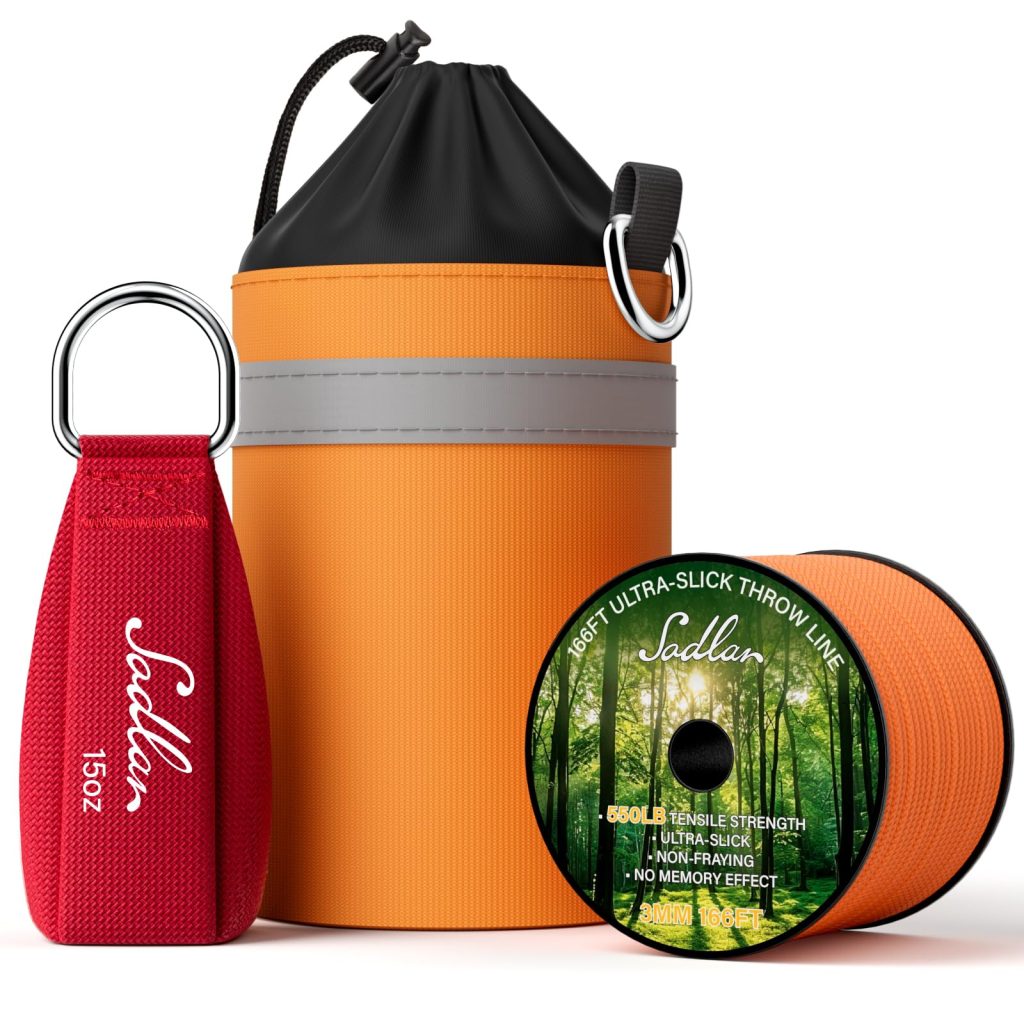
Quick answer: Triberion lists 12, 14, 15 and 16 oz throw-bag configurations. These are nominal bag weights, not tested rankings for effort, target height or canopy conditions. Choose a compatible placement system using its instructions and appropriate training; the catalog does not establish one best beginner weight.
What a throw-line system does
An arborist throw bag carries a lightweight pilot line over a selected branch. Once the bag returns to the ground, the pilot line can pull a separately rated climbing or rigging line into position. The throw line and bag are positioning tools only. They are not designed to support a person, arrest a fall, lower a branch, or serve as rigging equipment.
Bag weight changes acceleration, trajectory, impact energy, and the ability to pull line back through the canopy. Line diameter and surface, bark texture, foliage, branch angle, wind, throw style, and redirects also change the result. That is why a one-size rule cannot replace observation and experience.
Compare documented weights
| Catalog label | Approximate metric conversion | What the number establishes |
|---|---|---|
| 12 oz | 340 g | Nominal bag weight only |
| 14 oz | 397 g | Nominal bag weight only |
| 15 oz | 425 g | Nominal bag weight only |
| 16 oz | 454 g | Nominal bag weight only |
Conversions use 1 avoirdupois ounce = 28.349523125 grams, rounded to the nearest gram. They are calculated conversions, not measurements of supplied bags. All four catalog kits list a 166-foot placement line; polyester is documented for the 12, 14 and 15 oz options, while the 16 oz record does not establish the line material; confirm the selected configuration and package contents before ordering.
What weight alone cannot tell you
A weight label does not establish throwing effort, fatigue, maximum target height, accuracy, reliable return through foliage, or compatibility with a particular line. Those outcomes depend on the complete equipment, line path, site and user. Triberion has not published a controlled comparison of these four configurations, so this guide does not assign a preferred canopy or user level to each weight.
Record a meaningful comparison
If a trained user compares compatible equipment during controlled ground-based practice, record the exact bag and line, line diameter and length, container, attachment, conditions, observed feeding or snagging, and the number of attempts. Keep the other components consistent when changing weight. Record observations as specific to that setup; do not extrapolate them to an untested target or treat them as a strength or safety certification.
Stop when the site or equipment is unsuitable. Extra bag weight cannot resolve electrical hazards, damaged trees, an unsafe flight path or inadequate training.
Safe setup and retrieval
Inspect the entire area before unpacking. Look for electrical conductors, deadwood, weak branch attachments, people, animals, windows, vehicles, roads, and neighboring property. Establish a controlled zone covering the possible flight, rebound, and fall path. Wear appropriate head and eye protection and follow applicable professional practices. If a bag becomes stuck, reassess from a safe position; never stand beneath it or leave it unattended.
Line care
Flake the 166-foot line into a clean, compatible container to help organize feeding; storage does not guarantee a tangle-free throw. Avoid stepping on it or pulling it through grit and oil. Dry line and bags before storage. Before every use, check the bag seams, ring or connection point, knot, and the entire line for cuts, glazing, heavy fuzzing, contamination, or flattening. Retire questionable components.
Check a specific kit configuration
The 15 oz option below is a configuration to compare, not a universal weight recommendation. Check line path, technique, impact risk and the current package contents.
Compare these catalog configurations
Specifications above come from the Triberion catalog record, not independent product testing. Confirm the selected configuration and package on Amazon.
Frequently asked questions
Should a beginner always start with 12 ounces?
No. The product records do not establish a universally suitable beginner weight. Follow equipment instructions and qualified training for the complete placement system.
Can one throw bag handle every tree?
Conditions vary enough that experienced users often carry adjacent weights.
Can the throw line be tied into a harness?
No. It must never be used as a climbing or life-support line.
What if the target is near a power line?
Do not throw. Maintain required professional clearance and select another safe work method.
Compare Triberion throw-line kits
Review and related guidance
Product specifications and safety boundaries in this comparison were rechecked against the current Triberion catalog on September 11, 2026. Continue with our guides to choose a complete throw-line kit or understand placement line and climbing rope.