
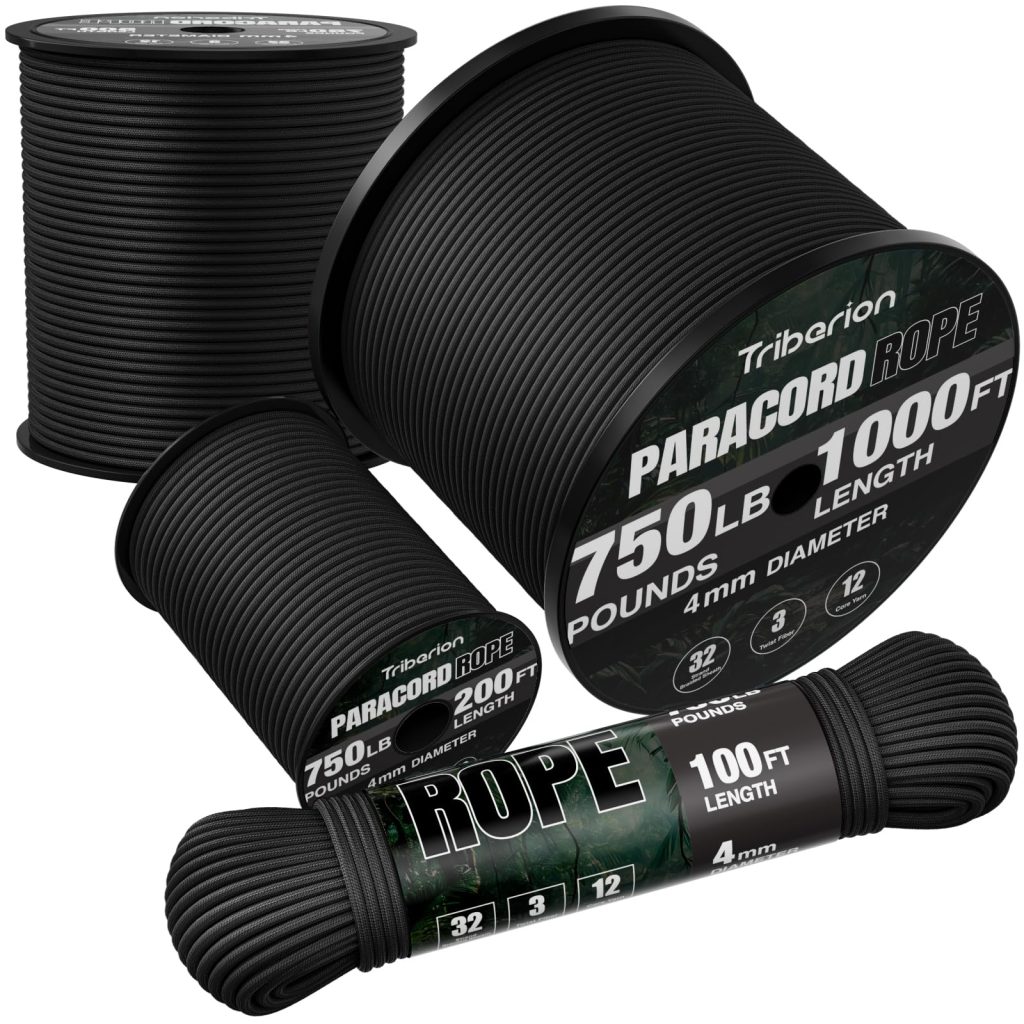
Quick answer: replace a working section of utility paracord when you find cuts, exposed or broken strands, melted or glazed areas, severe flattening, chemical contamination, persistent stiffness, or damage with an unknown history. Retire it sooner whenever failure could damage valuable equipment or create a hazard.
A practical inspection routine
Clean loose dirt first, then inspect the whole working length in good light. Look at the sheath while slowly bending the cord, and feel for hard, thin, lumpy, or unusually soft sections. Pay extra attention near knots, anchors, hardware, sharp edges, stakes, and any point that repeatedly rubs against another surface.
| Condition | Action |
|---|---|
| Light surface fuzz with no cut yarns | Monitor and move the contact point if practical |
| Cut sheath, exposed core, broken strands | Remove the affected section from service |
| Glazing, melting, hard shiny spots | Retire the affected section |
| Fuel, solvent, bleach, or unknown chemical exposure | Retire it; appearance alone cannot confirm integrity |
| Unknown load or shock event | Use new cord for consequential tasks |
Why the printed strength is not enough
A stated 550, 750, or 1000 lb strength does not describe the safe load for every knot, environment, or age. Knots and tight bends concentrate stress. Abrasion removes fibers. Heat can damage nylon before the change is obvious. Shock loading produces forces far above the static object weight. That is why inspection and conservative use still matter for ordinary utility work.
Care that extends useful life
- Store cord clean, dry, loosely wound, and away from sunlight, heat, rodents, fuel, and cleaning chemicals.
- Use edge protection where a line crosses rough metal, concrete, bark, or rock.
- Do not drag unused cord through grit or drive over it.
- Keep a simple label with the purchase date and intended use for frequently used sections.
- Cut out retired sections so they are not accidentally returned to service.
What can retired paracord be used for?
Clean, lightly worn pieces may remain suitable for visual samples, knot practice, or non-load-bearing craft decoration after the damaged part is removed. Mark them clearly. Cord exposed to chemicals or heat should be discarded according to local requirements rather than repurposed where skin, pets, or food could contact it.
Frequently asked questions
Does paracord expire on a fixed date?
Triberion does not publish a universal service-life claim. Storage, frequency of use, abrasion, loads, and exposure matter more than a single calendar interval.
Can I tape over a damaged spot?
Tape can hide damage but does not restore strength. Remove the damaged section from service.
Is washed cord as strong as new cord?
Cleaning cannot reverse fiber loss, heat damage, or chemical exposure. Inspect after cleaning and replace uncertain cord.
Product evidence used
Reviewed September 11, 2026 against the use, care, and safety statements maintained for Triberion’s current paracord catalog. No fixed lifespan or safe working-load claim is made because those values are not established in the product source data.